1960 Martin D-28 - Top and back separating, frets
and fretboard
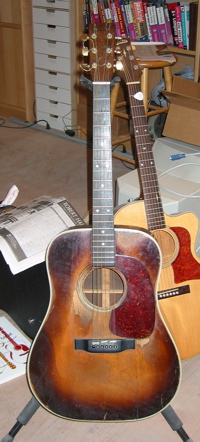
Danny Peck's '60 Martin D-28 |
Danny Pecks' 1960 Martin D-28 had some serious issues to deal with.
The finish on the guitar was pretty wasted from constant playing
and sweating. Much of the sides and front had finish missing. There
was nothing I would really want to do about that anyway, as refinishing
it would not only take away much of the value, but probably ruin
the tone as well.
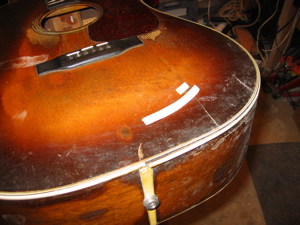
The big problems were that there were several places where the
top and back were separating from the sides. Not only that, there
were several cracks on the top, back and sides, some more in
need of attention than others, some previously repaired.
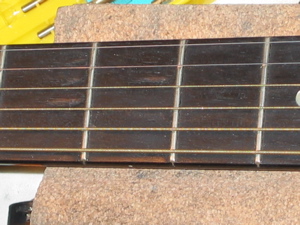
Another issue was the deterioration of the fretboard and frets.
The frets had serious wear and the fretboard had several deep
divots.
My job here was to get it back into good playing condition without
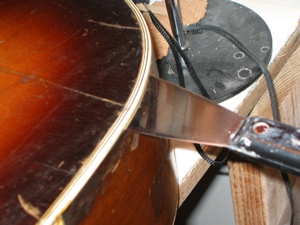
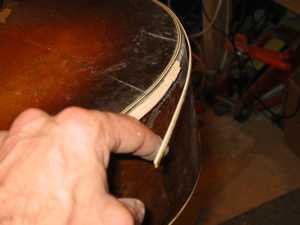
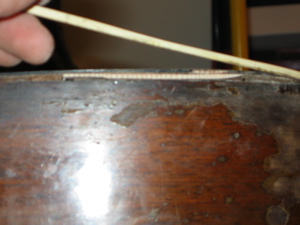
going crazy on it. I started by peeling back some of the binding
where the top was separating from the body. Fortunately, I was
at the end of the binding, so I could pull up a good piece of
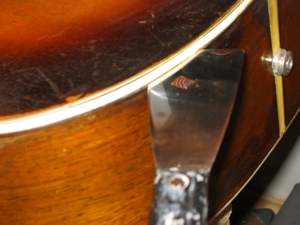
it. I could stick my modified putty knife all the way into the
instrument on one side and half way in on the other side. I also
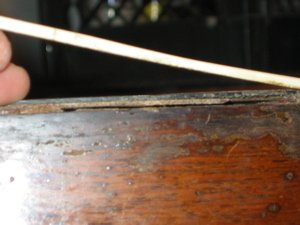
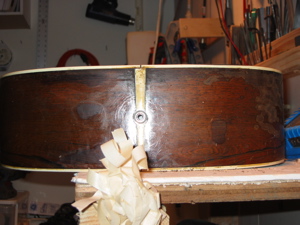
noticed that there was some wood missing where the top meets
the body just below the end pin. If I tried to simply glue the
top down, it would bend there and create the potential for a
more serious crack in the top, so I fashioned a couple of spruce
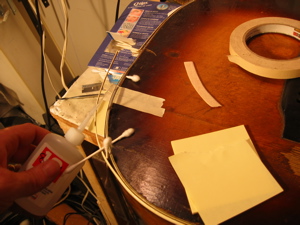
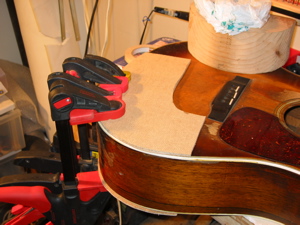
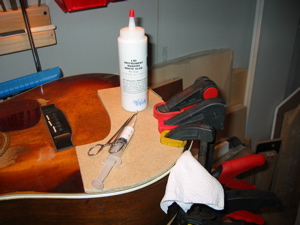
shims to fit in the separation and fill the gap. I glued the
shims in place, clamped it down, and cleaned the area up with
warm water, Q-tips and paper towels. It seemed to work perfectly.
I let it dry overnight and in the morning I unclamped it and it
was pleased to find it just as I wanted: strong and invisible.
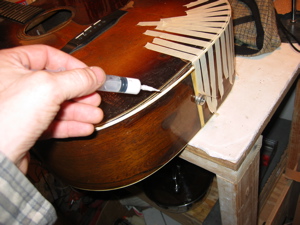
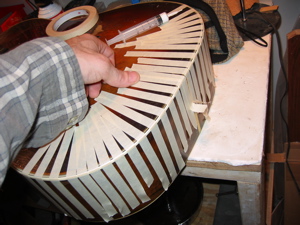
The other separation was a lot simpler as the top met the kerfing
just right, so I just glued it and clamped it. I did the same
with the separation on the back.
I then re glued the kerfing and scraped it even with the wood as best I could without taking too much away.
After that, I added two cleats to the crack on the side. I also noticed some creaking sound inside, which I found to be a loose brace. I squeezed some glue under the brace and put a post inside to keep it in place until it dried.
The body work was done and the guitar was now solid and should resonate well.
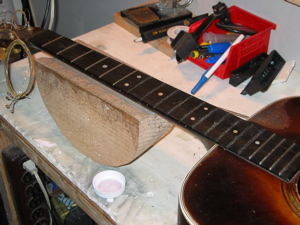
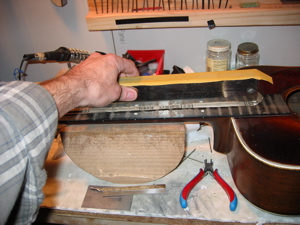
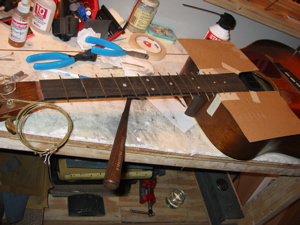
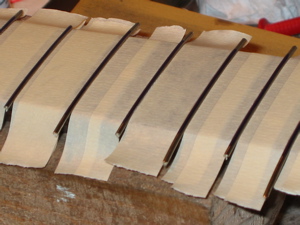
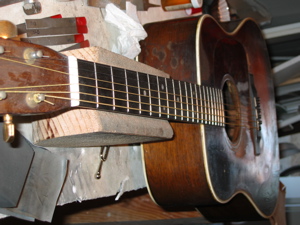
The fretboard was pretty well abused, so I removed the frets, sanded the fretboard until many of the minor divots were gone or going. I then roughed the remaining divots with a razor, filled them with rosewood powder and super glue, filed and sanded them down, then scraped them even with the fretboard with a razor. I proceeded to true the fretboard with a 16" radius block.
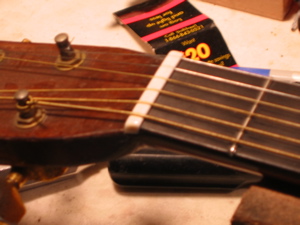
The fret slots were slightly large, so I had to crimp most of the fret tangs and super glue some fret ends down. The neck stayed true throughout the process, which was amazing considering there was no truss rod. I installed medium frets, similar to stock Martin frets. I then fabricated a new bone nut for it. The old one had a rosewood shim glued to the bottom of it. I strung it up, worked the nut into place, filed, sanded and polished it, then made the final slot adjustments. The strings were the same ones that I got it with, and still, the sound was heavenly. Nice round bass and crisp, even highs. Fantastic sounding instrument.
|